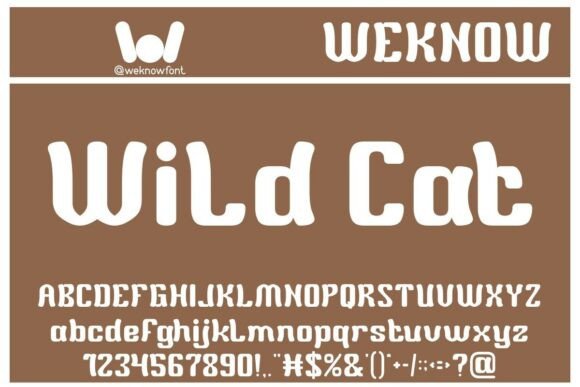
Wild Cat: The Retro Typeface with a Modern Roar
There's a certain magic in a design that feels both familiar and refreshingly new. It’s the visual equivalent of hearing a classic rock riff reinterpreted by a modern indie band—nostalgic yet utterly contemporary. This is the exact sensation the Wild Cat font delivers. It’s not just a set of letters; it’s a personality, a vibe, a creative catalyst that blends cartoon-inspired fun with a sophisticated retro flair. For anyone tasked with making a visual statement—whether you're a designer crafting a brand identity, an entrepreneur launching a product, or a content creator building an audience—this typeface offers a distinctive tool to cut through the noise.
More Than Just Letters: The Visual Soul of Wild Cat
At its core, Wild Cat is a display typeface designed to command attention. Its character stems from bold, rounded strokes and contours that feel hand-drawn yet meticulously refined. Imagine the playful energy of a 1960s cartoon title card meeting the clean confidence of modern graphic design. The letterforms are inherently friendly and approachable, but with a roguish edge that prevents them from feeling childish. This unique balance is what makes it so versatile. It can evoke the warmth of a vintage diner menu or the punchy energy of a music festival poster. As a premium font, its value lies in this detailed craftsmanship—each curve and terminal is designed to create harmonious, eye-catching words, transforming simple headlines into memorable visual hooks.
Putting the Wild Cat to Work: From Brand Identities to Social Feeds
The true test of any creative asset is its real-world application. Where does a font like Wild Cat truly shine? Its applications are surprisingly broad, making it a valuable asset in any designer's toolkit.
- Branding & Logo Design: For brands targeting a youthful, energetic, or creative market, Wild Cat can become the cornerstone of a brand identity. It’s perfect for logos that need to convey approachability, fun, and creativity—think boutique bakeries, indie game studios, children's educational apps, or music labels.
- Editorial & Packaging Design: In packaging design, it grabs attention on a crowded shelf. Use it for product names on artisanal goods, craft beer labels, or toy packaging. In editorial design, it can make magazine section headers, book chapter titles, or feature article headlines pop with personality.
- Digital Presence: Online, it’s a game-changer. Use it for YouTube channel logos, Instagram story highlights, or website hero text to immediately establish a distinct tone. For web design, it works brilliantly for short, impactful headlines and calls-to-action, though pairing it with a highly readable sans serif font for body text is crucial.
- Marketing & Merchandise: From event posters and digital ads to t-shirt graphics and tote bags, Wild Cat injects instant character. It’s the kind of creative font that makes marketing materials feel less corporate and more human, fostering better audience engagement.
A Practical Guide to Taming Your Wild Cat
Introducing a strong personality font into a project requires a thoughtful strategy to ensure it enhances, rather than overwhelms, your message. Here’s how to use it effectively.
Context is King. First, consider your project's goals and audience. Wild Cat is ideal for contexts where creativity and approachability are valued. It might not be the best fit for a law firm's annual report, but it's perfect for a creative agency's portfolio site. Always ask: does this font's personality align with the message I need to convey?
Master the Art of the Pair. No font is an island. The key to professional typography is smart font pairing. Because Wild Cat is so expressive, it pairs best with simple, neutral companions. A classic serif font or a clean sans serif font for body copy will provide a stable, readable foundation, allowing Wild Cat's headlines to be the star. Test combinations rigorously—see how they look at different sizes and in different contexts.
Readability First. While its bold curves are legible at larger sizes, using Wild Cat for long paragraphs of body text would strain the reader's eyes. Its strength is in display settings: headlines, titles, logos, and short bursts of text. For extensive written content, always opt for a highly legible body font.
Check the Toolkit. When you acquire a commercial font like Wild Cat, review all the included styles. Does it have a regular and a bold weight? Are there stylistic alternates or ligatures? Understanding the full range of the typeface allows you to use it more flexibly and creatively across different parts of a project.
Understand the License. This is a critical, often overlooked step. Always review the licensing agreement. Ensure it covers your intended use—whether for a single client project, merchandise for sale, or across multiple digital platforms. Proper licensing protects you legally and supports the independent designers who create these valuable design assets.
The Final Word: Unleashing Controlled Creativity
In a landscape saturated with generic visuals, a font like Wild Cat offers a way to stand out with authenticity and charm. It’s a tool for visual storytelling, allowing you to build brand recognition, create engaging social media graphics, and design marketing materials that resonate on an emotional level. The goal isn't to use it everywhere, but to use it strategically—where its retro flair and playful energy can do the most work for your project. By understanding its strengths and pairing it wisely, you can harness its wild spirit to create designs that are not only professional but also distinctly, memorably yours.