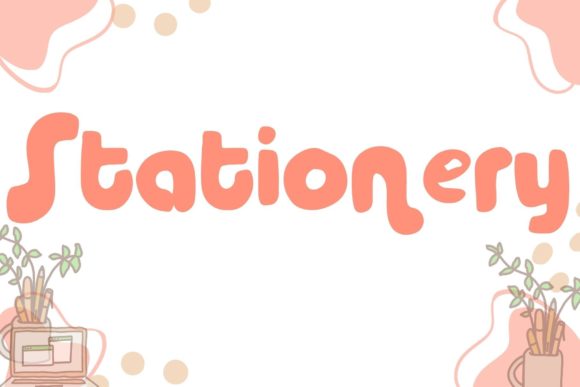
Why the Stationery Font Feels Like a Friendly Handshake
You know that feeling when you walk into a cozy coffee shop, and the chalkboard menu just makes you smile before you even order? That’s the kind of energy we’re talking about today. It’s not just about letters on a page; it’s about the vibe, the personality, and the immediate connection you make with your audience. In a digital landscape crowded with sterile, corporate typefaces, finding something with genuine warmth can be a game-changer for your next project.
Enter Stationery. This isn't just another file sitting in your font library; it's a typeface with a distinct personality. It lands firmly in the category of a display font, but with a specific flavor. It’s cute, jolly, and undeniably approachable. Think of it as the typographic equivalent of a handwritten note from a friend—casual yet intentional, playful but legible. For anyone working in branding, design, or content creation, understanding how to wield a font like this is key to unlocking a more human connection with your market.
Capturing the "Cute and Jolly" Vibe
So, what exactly makes a font feel "jolly"? It usually comes down to the details in the curves and terminals. Stationery avoids sharp, aggressive angles. Instead, it likely utilizes softer strokes and rounded edges, mimicking the natural flow of ink or marker. This visual softness disarms the viewer. It doesn't demand attention with authority; it invites attention with charm.
When you’re designing a logo or a headline, the font sets the emotional tone before a single word is read. If you’re launching a brand that needs to feel accessible—perhaps a boutique bakery, a children’s educational app, or a lifestyle blog—using a rigid, geometric sans-serif might create an unintentional barrier. Stationery, conversely, acts as an icebreaker. It tells your audience, "We are friendly, we are creative, and we don't take ourselves too seriously." This is particularly effective in the apparel industry or for creative entrepreneurs who want to highlight their personal touch.
Practical Applications: Beyond the Logo
While a typeface like Stationery shines brightly in logotypes, its utility extends far beyond a single brand mark. The versatility of a good display font lies in its ability to maintain its character across different mediums without losing impact. Let’s look at where this specific style can elevate your visual communication.
Brand Identity and Packaging
Consistency is the backbone of brand recognition. If your logo uses Stationery, carrying that font over to your packaging design creates a cohesive experience. Imagine a product box where the "Thank You" message or the product description is written in this font. It reinforces the brand personality and makes the unboxing experience feel more personal. It’s a small detail that signals quality and care to the customer.
Digital Spaces and Social Media
In the fast-paced world of Instagram and YouTube, you have milliseconds to stop the scroll. Bold, expressive typography is your best friend here. Using Stationery for overlay text on video thumbnails or as the headline for social media graphics can inject immediate energy into your feed. It works beautifully for "Stories" or Reels where a handwritten, diary-like aesthetic often performs well. Because it’s a display font, it grabs attention, making it ideal for calls to action or highlighting key quotes.
Editorial and Print Materials
Don't limit this style to digital screens. For magazine covers, book titles, or even internal chapter headings, a font like Stationery adds a layer of editorial design flair. It breaks the monotony of standard body text (like a standard serif or sans-serif) and guides the reader's eye to the most important information. If you’re designing a poster for a local music event or a flyer for a community workshop, this font ensures your message feels lively and engaging rather than bureaucratic.
The Art of Pairing and Readability
Here is where the practical advice comes in. As a designer or business owner, you can't just pick a cute font and call it a day. You have to think about the ecosystem of your typography. A common mistake with display fonts is using them for everything. If you try to write a long paragraph using Stationery, you’ll likely run into readability issues. Display fonts are designed for impact, not for long-form reading.
The solution? Font pairing.
To make Stationery work effectively, you need to balance it with a workhorse font. Because Stationery has a lot of personality, you want to pair it with something neutral and clean.
- The Classic Combo: Pair Stationery with a clean sans-serif font. Think of fonts like Montserrat, Open Sans, or Lato for your body text. The neutrality of the sans-serif lets the personality of Stationery pop without causing visual clutter.
- The Sophisticated Mix: If your brand leans slightly more upscale but still wants that friendly vibe, try pairing it with a modern serif font. A high-contrast serif can ground the playful nature of the display font, creating a look that is chic yet approachable.
Always test your pairings in context. Don't just look at the letters "Aa Bb Cc." Put them into a mockup of your website header, your business card, or your Instagram post. Check the hierarchy. The headline (Stationery) should be the star, while the supporting text (the body copy) should fade into the background, providing necessary information without fighting for attention.
Aligning Typography with Project Goals
Choosing the right typeface is essentially a strategic business decision, not just an artistic one. It’s about matching the tool to the goal. Ask yourself: What is the primary emotion I want to evoke?
If you are a content creator or blogger, your goal is likely connection and authenticity. A font that mimics the human touch of handwriting helps bridge the gap between screen and soul. It makes digital content feel tangible.
If you are in the music or movie industry, specifically in genres like indie, pop, or family entertainment, a jolly display font can define your visual marketing. It sets the tone for the album art or the movie poster, hinting at the fun waiting inside.
For game designers, typography helps build the world. A font like Stationery could be perfect for a puzzle game, a casual mobile game, or an adventure game with a lighthearted narrative. It adds to the user interface (UI) in a way that enhances gameplay rather than distracting from it.
Commercial Considerations and Final Thoughts
One final, crucial point for anyone using fonts for professional work: licensing. It is tempting to download free fonts from random corners of the internet, but for commercial projects—logos, merchandise, paid ads—you must ensure you have the correct license. A premium font usually comes with a license that covers these commercial uses, protecting you legally and supporting the type designers who create these assets.
Stationery offers a solution for those moments when you need your design to speak with a human voice. It’s a reminder that design doesn't always have to be serious to be effective. Sometimes, a little bit of "cute and jolly" is exactly what your brand needs to stand out in a crowded market. Whether you are designing a wedding invitation, a YouTube banner, or a new product line, this font provides the tools to create a visual identity that is both professional and deeply personal.