Unlocking Imagination: The Bold Appeal of Magic Wonder
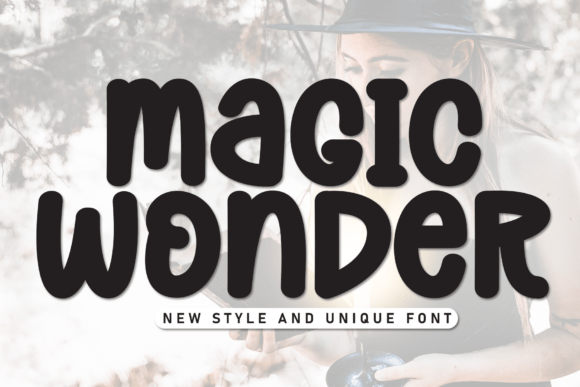
There is a specific feeling that comes with opening a storybook or a vintage candy box—a sense of stepping into a world where the rules are a little softer and the colors are a little brighter. As designers and brand builders, we are constantly hunting for ways to evoke that specific feeling of nostalgia and delight in our modern work. We want our projects to stop the scroll, capture attention, and communicate a sense of fun before a single word is read. This is where the personality of your typography does the heavy lifting. If you have been searching for a typeface that bridges the gap between playful whimsy and bold statement-making, you might be looking for exactly what Magic Wonder offers. It is a chunky, whimsical display font that feels like it was dipped in stardust, designed specifically to bring a smile to the viewer’s face.
The Anatomy of a Whimsical Typeface
When we talk about a "display font," we are referring to typefaces designed for headlines, logos, and short bursts of text rather than long paragraphs of body copy. Magic Wonder fits perfectly into this category, but it stands out because of its distinct structural choices. The font features rounded edges that soften the visual impact, making it feel friendly and approachable rather than aggressive. Unlike sharp, geometric sans-serifs that demand authority, this typeface invites the viewer in. Its "chunky" weight gives it excellent visibility, ensuring that your message isn't lost in a busy layout, while the quirky structure of the letterforms adds a layer of character that standard fonts simply cannot match.
Think about the difference between a standard Arial header and a header written in a font with personality. The former conveys information; the latter conveys a mood. Magic Wonder leans heavily into a fantasy aesthetic. It is the kind of typography you might see on a poster for a children’s theater production, the cover of a middle-grade novel, or the branding for a bakery specializing in cupcakes. It bridges the gap between professional polish and hand-drawn charm. For designers working on projects that require a "magical" look without sacrificing readability, this balance is crucial. It manages to be whimsical without becoming illegible, a common pitfall with many decorative fonts.
Practical Applications: Where Magic Fits Best
Finding the right home for a creative font is about understanding its strengths. Because Magic Wonder is bold and expressive, it is best utilized in scenarios where you want to grab attention immediately. It is not the font you use for the terms and conditions on a contract; it is the font you use to make someone want to pick up the product in the first place.
Here are a few real-world scenarios where a typeface like this shines:
- Children’s Branding & Education: If you are designing for a daycare, a toy store, or an educational app, this font signals safety and fun. It tells parents and children alike that this is a space for creativity.
- Event Invitations: Birthday parties, baby showers, or themed events often struggle to find a font that matches the "vibe." Magic Wonder works beautifully for headers on invitations, setting the tone for the event before the guest even reads the details.
- Game Design: Whether it is a mobile app or a board game, the title needs to pop. This font’s structure is ideal for game logos and UI elements where you need high impact and a touch of fantasy.
- Packaging Design: In the crowded aisles of a grocery store or the endless scroll of an e-commerce site, packaging needs to tell a story fast. For products like artisanal sweets, bath bombs, or children’s snacks, Magic Wonder can define the visual identity.
Furthermore, consider the digital landscape. Social media graphics rely heavily on visual stopping power. A bold display font like this is perfect for Instagram stories, YouTube thumbnails, or Pinterest pins where you need the text to be readable even on small screens. The "chunky" nature of the letters ensures they don't get lost in the noise of a busy feed.
Integrating Magic Wonder into Modern Branding
Using a whimsical font effectively requires a bit of strategy. You cannot simply swap out your entire corporate font library for a fantasy typeface and call it a day. Instead, think of Magic Wonder as a "accent" font in your typographic hierarchy. It serves a specific purpose: to inject personality.
If you are a small business owner creating a brand identity, you likely need a system that includes a serif or sans-serif font for your body copy (the readable text) and a display font for your headers. Magic Wonder pairs exceptionally well with clean, simple sans-serif fonts. Think about pairing the playful curves of Magic Wonder with the neutrality of a font like Lato, Open Sans, or Montserrat. This contrast allows the header to be the star of the show while the body text remains easy to read.
Consider a hypothetical brand: "Stardust Bakery." The logo uses Magic Wonder in a deep violet color. The menu uses a clean sans-serif for the list of items, but the section headers (like "Cupcakes" or "Cookies") use Magic Wonder in a smaller size. This creates visual consistency. The customer recognizes the "voice" of the bakery immediately because the typography is consistent across the packaging, the website, and the social media posts. This is how you build brand recognition—by using distinctive assets repeatedly and purposefully.
Technical Considerations for Designers
While the visual appeal is subjective, the technical utility of a font is objective. When working with a premium font like Magic Wonder, you want to ensure it functions well within your design software. One of the benefits of high-quality display fonts is that they often come with stylistic alternates or ligatures. This means you might have access to different versions of a letter "g" or "a" that can help you customize the look further, perhaps making it look slightly more handwritten or more structured depending on the context.
Before finalizing a design, always test your font pairings in context. Create a mockup of your poster or website landing page. Does the whimsical nature of the header font clash with the photography? Or does it complement it? For example, if you are using high-fashion photography, a chunky fantasy font might look out of place. However, if you are using illustration or lifestyle photography with warm lighting, Magic Wonder will likely feel right at home.
Another practical tip involves readability at scale. Display fonts are generally not meant for sizes below 14pt. If you try to force a whimsical font into a small caption, the quirks that make it beautiful at 48pt will make it muddy and unreadable at 10pt. Respect the font's intended use. Use it for the big moments—the headlines, the logos, the hero images—and rely on a sturdy workhorse font for the small details.
Licensing and Commercial Use
For entrepreneurs and business owners, the legal side of design assets is just as important as the aesthetic side. When you invest in a creative font, you are often purchasing a license that dictates how you can use it. Most premium fonts allow for commercial use, meaning you can use them on products you sell, in client work, and on monetized platforms. However, it is always best practice to double-check the licensing agreement included with the font files.
Understanding the difference between desktop licenses and webfont licenses is also helpful. A desktop license usually covers static images like PDFs, logos, and graphics. If you want to embed the font into your website so it renders live text (rather than just an image), you typically need a specific web license. For a font like Magic Wonder, which is perfect for hero sections and banners, having that web capability can significantly enhance your site's design.
Ultimately, choosing a font is an investment in your project's voice. Magic Wonder offers a specific, high-value aesthetic that is difficult to replicate with standard system fonts. It provides the tools to create designs that feel bespoke, professional, and full of life. Whether you are crafting a logo for a new startup, designing a cover for a fantasy novel, or creating a set of social media templates, having a bold, enchanting display font in your toolkit ensures you are always ready to add a little magic to your work.