Terror in the Crypt: Unearthing Gothic Horror in Modern Design
There’s a specific kind of chill that only classic horror can deliver. It’s the flicker of a film grain, the dramatic shadow cast by a candelabra, and the bold, blood-red title card that promises terror. If you've ever wanted to bottle that atmosphere and pour it directly into your creative projects, you're looking for more than just a typeface. You’re looking for a voice. Enter Terror in the Crypt, a captivating font that doesn't just spell out words—it tells a story of midnight screenings, gothic dread, and vintage suspense.
For designers, brand strategists, and creative entrepreneurs, finding a font with this much built-in personality is rare. It’s not merely a set of characters; it is a piece of design history. Inspired by the striking lettering of 1970s movie posters and the aesthetic of the golden age of Hammer Horror, this display typeface offers an unmistakable retro vibe. It captures the essence of an era where horror was theatrical, colorful, and unapologetically bold. But how do you take a font steeped in cinematic history and apply it to modern branding, packaging, or digital assets? The answer lies in understanding its visual weight and pairing it with the right creative strategy.
The Anatomy of a Classic Horror Typeface
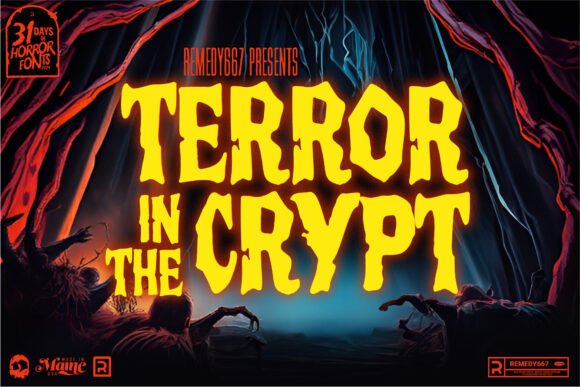
When we talk about "modern typography," we often think of clean sans-serifs and minimalist geometric shapes. Terror in the Crypt is the antithesis of that trend, and that is exactly why it works. Visually, it commands attention through high-contrast strokes and dramatic serifs. It carries the DNA of vintage movie posters—think hand-painted artwork where the typography was as integral to the mood as the monster on screen.
This typeface excels as a premium font because of its versatility within the horror and retro genres. It isn't a standard serif font you’d use for body text; it is a display font designed to dominate headlines. The visual characteristics include:
- High Impact: The letterforms are thick and commanding, ensuring legibility even when used as a texture overlay.
- Retro Authenticity: It avoids the "digital" look, offering a tactile feel that mimics ink bleed and screen printing.
- Gothic Undertones: The design balances sharp edges with stylistic curves, evoking a sense of the supernatural.
For a graphic designer or a small business owner, this visual appeal translates to immediate brand recognition. When a customer sees this font, they instantly understand the vibe: edgy, nostalgic, and high-energy.
Real-World Applications: From Screen to Print
The true value of a creative font like this lies in its application. You aren't just buying a file; you are investing in a tool that can transform your marketing assets. Here is how you can leverage the chilling essence of this typeface across various mediums.
Logo Design and Brand Identity
If you are launching a brand that leans into the alternative, gothic, or vintage aesthetic, your logo is your flag. Using Terror in the Crypt for your wordmark immediately sets a tone. It works exceptionally well for:
- Escape rooms and haunted attractions.
- Craft breweries specializing in dark stouts or IPAs with "spooky" branding.
- Indie record labels or vintage clothing resellers.
- Podcast covers for true crime or horror fiction series.
However, brand identity requires consistency. If you use this font for your logo, consider using it sparingly for headers in your editorial design to maintain that visual link without overwhelming the reader.
Packaging and Merchandise
Physical products need shelf presence. In packaging design, typography often does the heavy lifting. Imagine a Halloween-themed coffee blend or a hot sauce bottle with a "killer" heat level. This font transforms standard packaging into a collector's item. It evokes the feeling of a VHS tape you’d find in the back corner of a rental store—a piece of nightmare fuel that fans of the genre will love to display.
For merchandise, such as T-shirts, tote bags, or enamel pins, a display font is crucial. Standard fonts often disappear on apparel, but the distinct 1970s lettering of this typeface ensures your message is seen and appreciated by the wearer and the viewer.
Digital Presence and Social Media
In the fast-scrolling world of social media graphics, you have milliseconds to stop a thumb. Terror in the Crypt is a scroll-stopper. Its unique silhouette stands out against the clutter of standard Instagram fonts.
Use it for:
- Event announcements for themed parties.
- YouTube thumbnails for gaming or movie review channels.
- Headers on websites dedicated to fiction writing or art portfolios.
When used in web design, ensure it is saved as a high-resolution image or a web-optimized font file to maintain crisp edges on retina screens.
Strategic Typography: Pairing and Professionalism
While the font is a powerhouse, using it effectively requires a bit of strategy. A common mistake in logo design and layout is using a highly stylized display font for everything. To maintain readability and professional presentation, you must master the art of font pairing.
Terror in the Crypt demands a partner that can take a backseat. Because it is so expressive, pair it with a neutral, clean typeface for body copy. A simple sans-serif or a clean serif font works best.
- The Contrast Rule: If the main headline is the complex, gothic style of the crypt, your sub-headline should be a clean, modern sans-serif. This creates visual hierarchy.
- Spacing Matters: Display fonts often benefit from slightly increased letter-spacing (tracking) to let the details of the letters breathe, especially at smaller sizes.
By balancing the dramatic flair of the primary font with a functional secondary font, you ensure your marketing assets look polished rather than chaotic. This balance is key to improving brand recognition and keeping your audience engaged.
Licensing and Long-Term Value
For entrepreneurs and designers, the technical side of assets is just as important as the aesthetic. When investing in a commercial font, understanding the licensing is non-negotiable.
Most premium fonts come with specific tiers of licensing. You need to ensure that the license covers your intended use:
- Digital License: Covers use on websites, social media, and digital products.
- Desktop License: Covers use in software like Adobe Photoshop or Illustrator for creating logos and print files.
- Apparel/Merchandise License: Some licenses require an extended version if you are printing the font on physical goods for sale.
Always review the End User License Agreement (EULA) included with your design assets. This ensures you are legally protected as your business grows. Investing in a legitimate, high-quality typeface like Terror in the Crypt ensures that your files are clean, your vectors are sharp, and your legal bases are covered.
Unleashing the Creative Potential
Ultimately, the goal of any design tool is to help you communicate more effectively. Whether you are designing a movie poster, a t-shirt line, or a spooky menu for a pop-up restaurant, the typography you choose tells your audience how to feel.
Terror in the Crypt isn't just a nod to the past; it is a versatile tool for the present. It allows you to tap into the rich visual language of horror cinema, giving your projects a sense of depth and history that generic fonts simply cannot provide. It transforms standard text into an experience.
If you are looking to add a gothic edge to your toolkit, to create designs that feel cinematic and immersive, this typeface offers the perfect solution. It bridges the gap between nostalgic horror and modern visual communication, ensuring your work leaves a lasting, chilling impression.