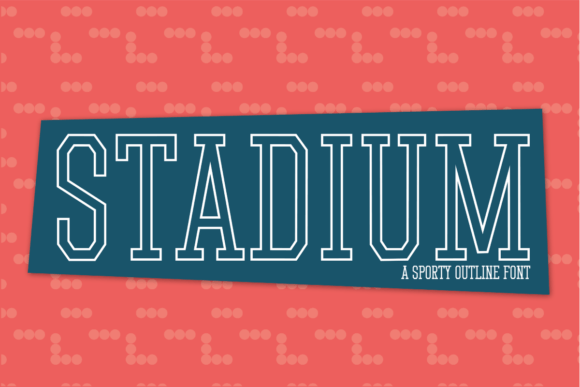
Stadium: The Typeface That Brings Game Day Energy to Your Designs
There's a particular kind of energy you feel when you walk into a packed arena—the roar of the crowd, the sharp lines of the court, the bold numbers on the jerseys. That feeling is exactly what the Stadium typeface captures in every letter. If you've been searching for a font that carries the weight and excitement of competitive sports while still looking clean and contemporary, this outline display typeface deserves a spot in your design toolkit. It's not just another blocky athletic font. Stadium blends the geometric precision of classic stadium signage with a modern outline treatment that gives your typography real depth and dimension.
Why Outline Typography Works So Well for Bold Projects
Outline fonts occupy a unique space in typography. They command attention without overwhelming a layout. Think about the last time you saw a well-designed sports poster or a striking team logo—chances are the lettering had that hollow, dimensional quality that makes your eyes linger. Stadium taps into this effect deliberately. The letterforms are built on strong, geometric foundations, but the outline style keeps them from feeling heavy or dated. This balance is what makes the typeface so versatile. You get the commanding presence of athletic block lettering without the visual bulk that can sometimes crowd a design.
For anyone working on branding projects, this matters more than you might think. A gym owner building a new logo, a content creator designing YouTube thumbnails for a sports channel, or a small business launching a line of athletic apparel—all of them need type that feels energetic but remains legible across different sizes and mediums. Stadium handles this well because its clean geometric structure doesn't fall apart when you scale it down. The outlines stay crisp, the letter spacing holds up, and the overall character of the typeface remains intact whether it's printed on a banner or displayed as a website header.
Real-World Applications That Actually Make Sense
Let's talk about where this font genuinely shines, because the use cases go far beyond sports branding—though that's certainly its sweet spot. If you're designing game day posters or event flyers, Stadium gives you that instant association with competition and action. Pair it with a strong sans serif font for body copy and you've got a layout that looks professionally produced without a lot of fuss.
Merchandise and apparel design is another area where this typeface excels. T-shirt graphics, hat embroidery, hoodie prints—these all benefit from bold, simple lettering that reads well at a glance. The outline treatment adds a layer of visual interest that solid block letters simply can't match. It gives your designs a modern edge that appeals to younger audiences while still feeling familiar enough to resonate across age groups.
But here's where it gets interesting: Stadium also works surprisingly well outside the sports context. Think about a fitness influencer's Instagram feed, a motivational blog header, or even the packaging design for an energy drink or protein bar brand. The font's inherent sense of strength and momentum translates naturally into any project that needs to convey vitality and forward motion. A creative entrepreneur launching a new product line could use Stadium for headlines on their website and marketing assets, then pair it with a softer script font or handwritten font for a contrasting, approachable feel in supporting text.
Getting the Most Out of Your Font Pairings
One of the most practical things you can do with a display font like Stadium is learn how to pair it effectively. Because it's bold and high-impact by nature, it works best as a headline or accent typeface rather than for running body text. Try combining it with a clean sans serif font for a modern, streamlined look. Something like a geometric sans or a humanist sans complements the angular quality of Stadium without competing for attention. If you want to soften the overall feel—say, for an invitation to a sports-themed party or a community event—a script font or even a casual serif font can create an appealing contrast.
The key is to let Stadium do the heavy lifting in terms of visual impact while your secondary typeface handles the quieter, more detailed information. This approach also improves readability across your designs, which is something that often gets overlooked when people fall in love with a striking display typeface. You want your audience to be able to absorb your message quickly, especially in fast-scrolling environments like social media graphics or digital ads.
Building a Consistent Brand Identity Around Strong Typography
Typography is one of the most underrated tools for building brand recognition. When you choose a typeface that genuinely reflects your brand's personality—and then use it consistently across every touchpoint—you create a visual shorthand that people start to associate with your business. For brands in the fitness, sports, outdoor recreation, or active lifestyle spaces, Stadium offers that immediate visual connection to energy and performance.
Consider how it might work across a full brand identity system. Your logo could feature Stadium in an outline treatment layered over a solid shape. Your website headers use the same typeface for continuity. Your social media templates incorporate it for post titles and call-to-action text. Your packaging uses it for product names and key messaging. When all of these elements share the same typographic DNA, your brand starts to look and feel cohesive in a way that builds trust with your audience.
This kind of visual consistency is what separates amateur-looking designs from professional presentations. It doesn't require a massive budget or a design agency—it just requires thoughtful font selection and disciplined application. A premium font like Stadium, with its clear personality and versatile structure, gives you a strong foundation to build from.
Practical Tips Before You Start Designing
Before you dive into your next project, take a few minutes to explore all the styles and weights included with the font family. Many display typefaces come with variations—different outline thicknesses, filled versions, or stylistic alternates—that can expand your creative options significantly. Understanding what's available helps you make more intentional design choices rather than settling for the default.
Also, pay attention to licensing. If you're using the font for commercial work—client projects, merchandise you sell, or business branding—make sure you have the appropriate commercial font license. This is one of those details that's easy to overlook but important to get right, both legally and ethically. Most font marketplaces make licensing terms clear, so take a moment to review them before purchasing.
Finally, test your designs at multiple sizes and on different backgrounds. Outline fonts can behave differently depending on the context. A letterform that looks incredible on a dark background at poster size might lose some of its impact on a light background at thumbnail scale. Print a test, preview on your phone, and get a second opinion if you can. The goal is to make sure your typography works as hard as you do—delivering the right message, to the right audience, with the right visual impact every single time.